Water’s Edge Dermatologists Warn about 'COVID Toes'
Dermatologists at Water's Edge Dermatology have been warning the public about possible new signs of COVID-19, the novel coronavirus. They include various coronavirus rashes as well as red or purple discolorations on the hands and feet, especially the toes. The phenomenon has been dubbed "COVID toes."
Dr. Alissa O'Brien on CBS12 News
On an April 22 appearance on CBS12 News, Dr. Alissa O'Brien said she's seen several patients who've displayed skin changes that could be the result of the coronavirus. She explained that shortly after hand or foot discolorations appear, small, painful blisters may form, eventually turning into lesions. Other types of rashes have been associated with COVID-19 as well, she noted.
RELATED: Skin Rashes and Purple Spots: Symptoms of the Coronavirus?
If you’re experiencing unexplained rashes or discolorations on your hands or feet with no history of burns, Dr. O'Brien suggested consulting a dermatologist or another physician, at least virtually through telemedicine. If you book a telemedicine appointment, you should be able to send a photo to the provider in advance for assessment. She also suggested inquiring about getting a COVID-19 test if the provider doesn’t mention it. Anyone who is carrying the disease must be isolated to avoid spreading it to others.
Dr. Ted Schiff in Lake Okeechobee News
In an April 22 article in Lake Okeechobee News on purple spots on the toes or fingers, Dr. Ted Schiff, founder and chief medical officer of Water's Edge Dermatology, was cited as an expert source. He explained that the spots are possible early signs of COVID-19 and called them "not an uncommon finding in coronavirus." In children and young adults, he said the spots or a rash may be the only indication of coronavirus infection.
Dr. Schiff noted that the reason for the spots is not yet clear, but constriction or blockage of a blood vessel may be the culprit. The blood vessels can open and close in response to impulses from the nervous system, he said, and COVID-19 can affect the nervous system. The spots may eventually scab over.
Spots don't mean the person has the coronavirus, only that they might — and should get tested if possible. They should also be isolated from others. "If I were a parent and I saw this, I would protect others from this child," said Dr. Schiff. It could save a life, he added.
According to the article, Okeechobee County appears to have only a few confirmed cases of COVID-19, but it's likely that more people have the disease and don't know it or haven’t been tested.
If you or your child is experiencing skin changes like the ones described here, note that Water’s Edge Dermatology offices remain open. Water's Edge Dermatology is also offering teledermatology visits for many skin conditions. To book a TeleDerm visit with a Water's Edge Dermatology provider, go to wederm.com/telederm-appointment.
Written by Marianne Wait, an award-winning health and wellness writer based in New Jersey.
Skin Rashes and Purple Spots: Symptoms of the Coronavirus?
Medical review by Ted Schiff, MD
Fever, tiredness, dry cough and shortness of breath are common symptoms of the new coronavirus called COVID-19, but not everyone who develops the disease has the same symptoms. Some people may get a runny nose, sore throat or diarrhea or lose their sense of smell. Doctors are also seeing skin rashes on the body and purple spots on the feet, toes and (less commonly) the hands in some patients diagnosed with coronavirus. (These spots are being dubbed "COVID toes.") In some cases, the coronavirus skin rash or spots may be the first or even the only symptom of COVID-19.
“There have been an increasing number of reports of skin rashes and other skin manifestations, and this is something we’re watching very closely,“ said Ted Schiff, MD, founder and chief medical officer of Water’s Edge Dermatology.
Photo credit: International Federation of Podiatrists
Virus-induced rashes, like the coronavirus skin rash, are not uncommon. They can happen as a result of the immune system’s attempt to fight the invader. With COVID-19, doctors in several countries have reported seeing various types of skin changes, including:
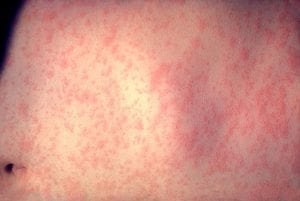
| Exanthems, especially on the torso: widespread, patchy red rashes |
|
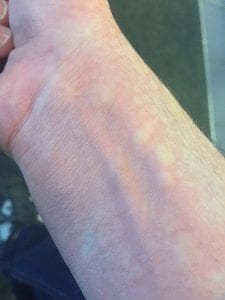
| Urticaria (hives): red or skin-colored bumps that appear suddenly |
|
| Purpura Petechiae: clusters of small round spots that may look like a rash and that result from broken blood vessels |
|
| Livedo reticularis: mottled skin, often on the legs, caused by obstructed small blood vessels near the skin |
|
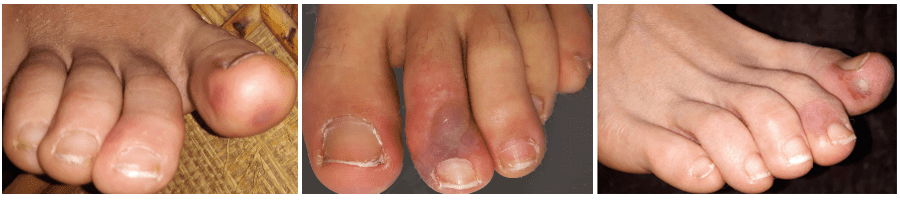
| Foot and toe lesions: purple spots (aka "COVID toes"), similar to chilblains (lesions caused by blood-vessel narrowing upon exposure to cold air), that may be painful |
|
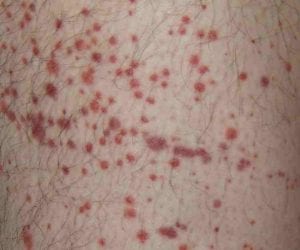
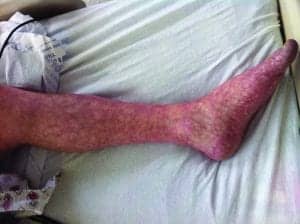
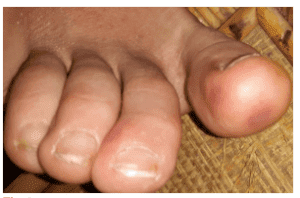


The purple spots appearing on toes, feet and sometimes hands, which may resemble a bruise, are thought to result from blockages or tiny clots in small blood vessels. For reasons not yet understood, the coronavirus rash appears to occur more often in children and adolescents with COVID-19 than in adults. Some doctors are reporting cases thought to be associated with COVID-19 in which the spots cover the entire tip of the toe. At least one case of scabbing has been reported. The spots heal on their own and don’t appear to dangerous.
Since children infected with SARS-CoV-2, the virus that causes COVID-19, often have no other symptoms of the disease — even though they can pass the virus on to others — purple spots can be helpful as possible signs of infection.
People with unusual skin changes should contact their healthcare provider. A virtual visit with a board-certified dermatologist, primary care physician or pediatrician is likely the best option in non-emergency cases. When a skin change is the primary symptom or the only symptom, a dermatologist may be best equipped to provide an accurate diagnosis.
If the doctor suspects COVID-19, he or she will recommend self-quarantine for 14 days and can help you determine if testing is needed and available.
Written by Marianne Wait, an award-winning health and wellness writer based in New Jersey.